Learn real spoken Korean from the dramas you already love
Simple phrase cards, clear pronunciation, and the context that textbooks skip.
Beginner Phrases
Everyday phrases from romance and family dramas, with pronunciation and usage tips.
Drama Vocabulary
Words you keep hearing on screen, grouped by theme and everyday situation.
Grammar Made Simple
Short, jargon-free explanations of the patterns behind the phrases you hear.
Latest lessons
- Sunbae (선배) & Hoobae (후배): K-Drama’s Favorite Workplace Trope
 If you watch K-dramas set in high schools, colleges, or corporate offices, you will hear “sunbae” (senior) and “hoobae” (junior) in almost every episode. But these titles are about more than just respect—they dictate who pays for dinner, who gets bossed around, and how secret office romances stay hidden.
- Dropping the “Yo”: When K-Drama Characters Switch From Polite to Casual Korean
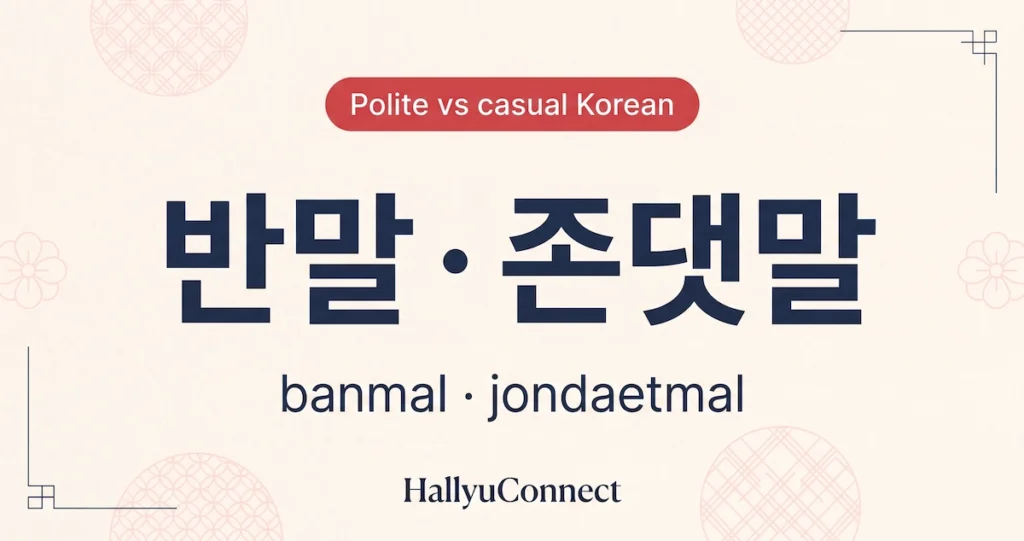 If you’ve mastered the basics of polite vs. casual Korean, you know that dropping the “yo” (-요) at the end of a sentence changes the whole vibe. In K-dramas, the moment a character switches from jondaetmal (polite speech) to banmal (casual speech) is a major plot device used for romantic milestones, accidental slip-ups, and fierce power moves.
- Aniya (아니야) Part 2: 4 More Ways This K-Drama Word Changes Meaning
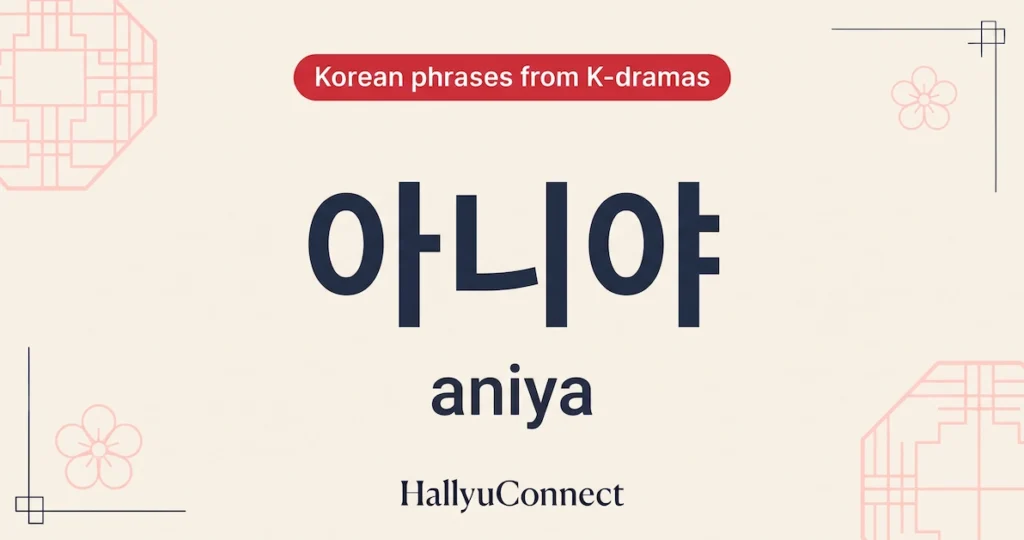 In our first look at 아니야 (aniya), we saw how tone turns “that’s not it” into a defensive crush excuse or a gentle comfort. But K-dramas use it in even more ways: here are four more moods of 아니야, from flustered modesty to the exact moment a character pieces together the truth.
Get the free 30-phrase starter pack
A 10-page PDF of everyday K-drama phrases, with Hangul, pronunciation, casual forms, and a checklist to track your progress.
Your free K-Drama Korean Starter Pack
30 phrases you’ll hear in almost every drama, with Hangul, pronunciation, and when to use them. A printable PDF, free in your inbox.
No spam. Unsubscribe anytime.